


High-Performance Draw Call Management
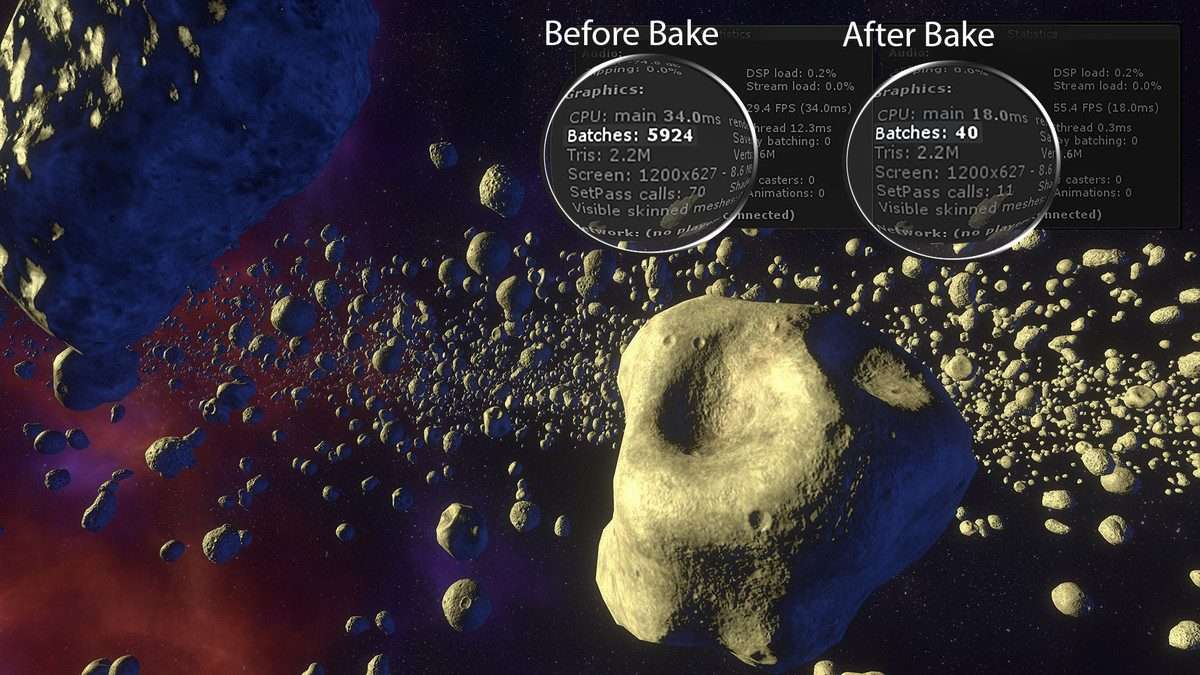
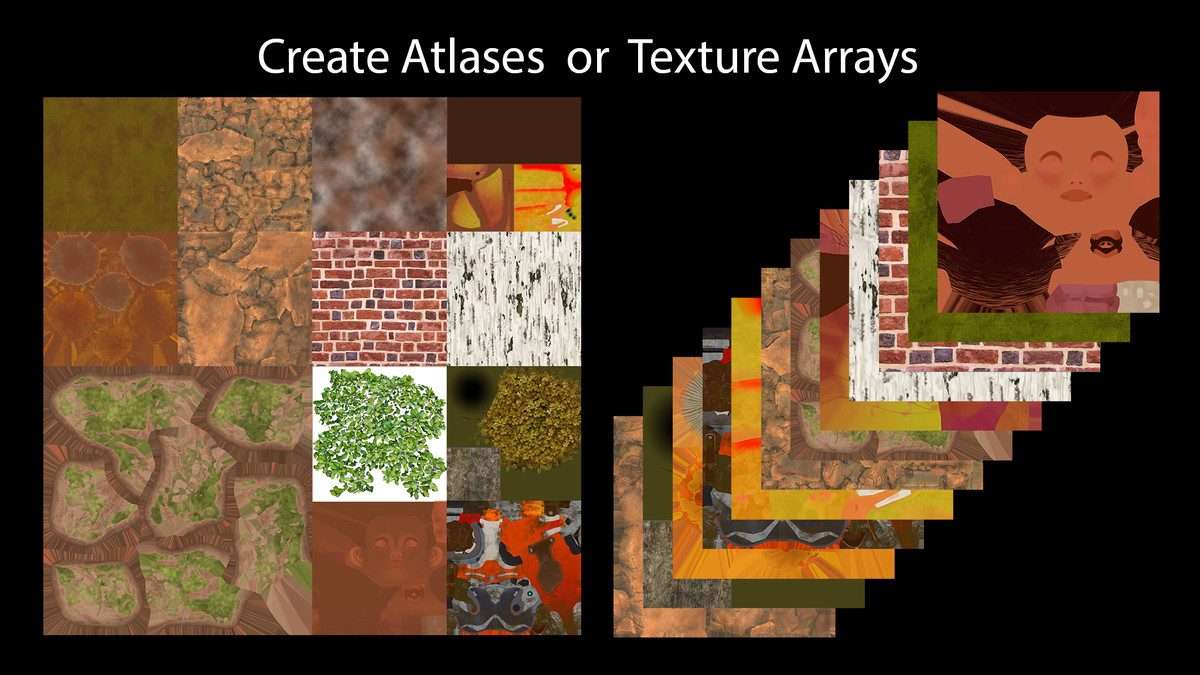
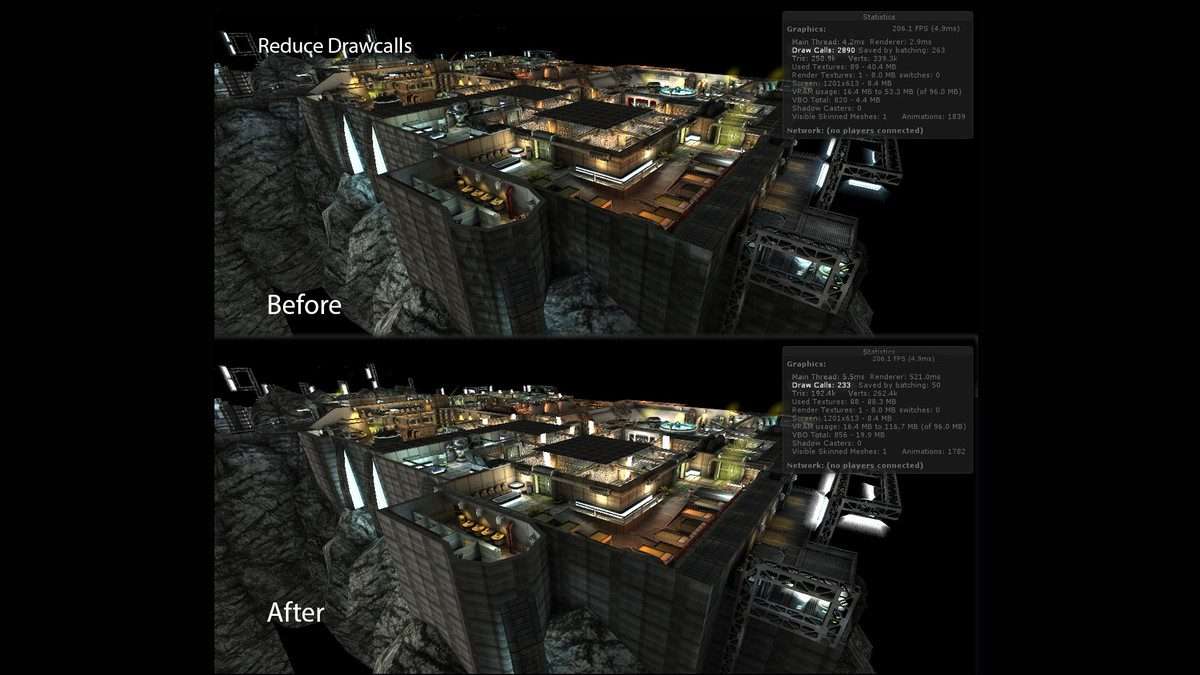
In any production environment, managing the batch count is critical for maintaining a stable frame rate, and Mesh Baker Unity has been the industry standard for this task for over a decade. Currently running 3.40.0, this toolkit solves the fundamental issue of the SRP Batcher or Static Batching failing due to unique material instances or complex multi-material meshes. By physically combining meshes and consolidating textures into atlases or texture arrays, it allows the engine to submit a single draw call where there were previously hundreds.
Integration Tips
- LOD Group Alignment: When baking modular environment pieces, ensure your source meshes have consistent LOD levels. You can bake LODs into a single combined mesh, but you must ensure the ‘LOD’ suffix naming convention is maintained to allow the tool to generate the combined LODGroup correctly.
- Material Property Blocks: If you are currently using MaterialPropertyBlocks for color variation, you’ll need to decide between baking those variations into the atlas or switching to a custom shader that reads vertex colors, which Mesh Baker can bake into the combined output.
- Custom Shader UI: If your project uses custom HLSL shaders or Shader Graph, you will need to map your shader properties in the ‘Texture Blocker’ settings so the tool knows which channels (e.g., _MaskMap, _MetallicGloss) to include in the bake.
Best Use Cases
- Modular Environment Design: In city builders or dungeon crawlers where thousands of props share the same shaders, Mesh Baker is used to create ‘cluster’ prefabs. This bypasses the overhead of the Unity C# transform sync by reducing the number of GameObjects the engine needs to track.
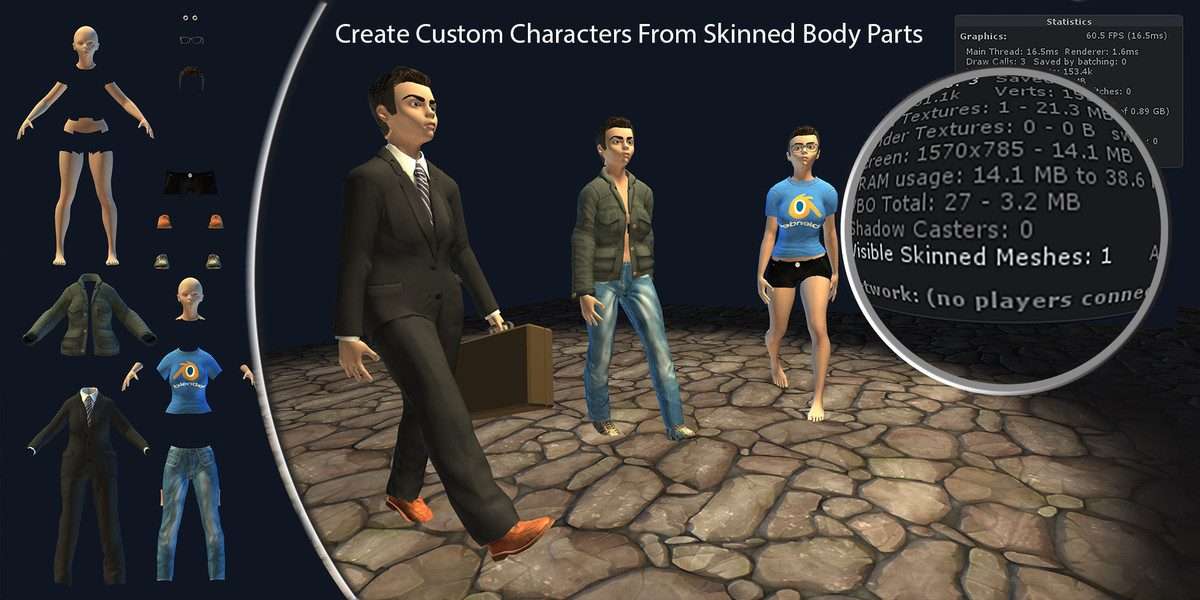
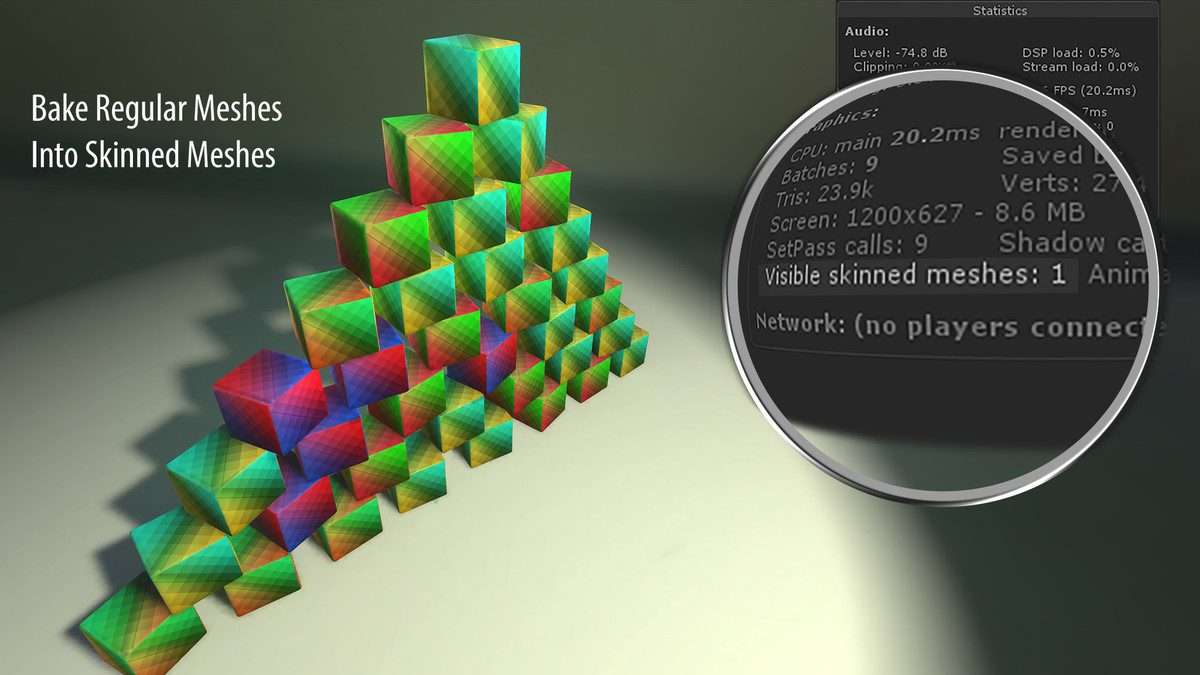
- Customizable Character Systems: For RPGs using Skinned Mesh Renderers for armor pieces, the tool can merge multiple Skinned Meshes into a single mesh sharing a single skeleton. This drastically reduces the CPU skinning cost and the number of bones being processed per frame.